You’ve just received the notification. Your contract monitoring visit is in two weeks. You know you deliver great care – but how can you prove that to the local authority?
The short answer
You might balk at spending too much time putting this evidence together. After all, you’re busy – and extra report-writing hours aren’t funded. Use your care management software to track care delivery and client outcomes, then generate reports so you have long-term evidence for your council care contract reviews.
In this guide, we’ll look at why councils monitor contracts, what they want to see, and how you can make it easy to put the details together.
2 minutes, no email needed
Six questions about the evidence councils ask for. Think about what you could hand over this week, without asking your team to drop everything. Your answers stay on this page – nothing is saved or sent anywhere.
Could you show this month’s performance against your contract KPIs without building a report from scratch?
Could you evidence punctuality and delivered hours for any week the council picks?
Do you have monthly reports going back a year or more, ready to share?
Could you pull every safeguarding incident, with actions and follow-ups, in one place?
Are DBS checks, references and training records up to date for every member of staff?
Do you have a written business continuity plan you could hand over today?
0
out of 12
Close these first

It might feel frustrating to deal with local authorities monitoring your organisation’s work – especially as you’re already regularly assessed by the CQC.
Your local authority arranges contract monitoring visits to verify that they’re getting value for money. They want to ensure that all of the funded care hours are being delivered, and that service users are receiving appropriate care.
But it’s not all about money. Under the Care Act 2014, local authorities have a legal duty to make sure that service users in their area are:
Safe
Kept safe from harm.
Well cared for
Receiving appropriate care.
In control
Supported to make decisions about their own care.
Monitoring visits are an important way for council teams to fulfil these responsibilities.
Representatives from your local authority will look at records from your care service. They may also observe care delivery, talk to clients and their families, and interview care staff. They gather their evidence in three main ways:
Reviewing paperwork and digital records
Care plans, daily notes, MAR charts or eMAR, call logs and timesheets – through your home care software or printed reports, or the paper originals. Expect questions on policies and procedures, staff records and training, finances, and business continuity too.
Observing care delivery
This lets the local authority see how your care team work, and whether service users are being supported appropriately.
Discussions and interviews
The council team will talk to service users and families about their experience, and may interview your carers, administrators and other staff.
Your local authority may want to review paperwork before they visit. If so, they’ll contact you in advance to ask for the relevant records. Once they’ve completed their observations, they’ll prepare a report and send it to you.
The details vary by local authority and by your organisation’s circumstances. Your council should explain what they’ll be doing when they notify you about the visit.
Book a free tour
Walk in with the evidence already gathered
PASS captures call times, medication records and care notes as your team works – and turns a year of care into an audit-ready report in a few clicks.
Book a 20-minute demoUsed by 1,250+ UK providers · 24/7 UK support
Councils want records of the high-quality care you provide, plus the policies and procedures behind safeguarding, recruitment and your finances. It’s very similar to what CQC inspectors will ask to see, in fact.
The key difference is your contract. It sets out KPIs and outcomes you agreed to deliver – client goals, carer punctuality, financial compliance – and you need written evidence of how you’re performing against each one.
The council will want to see long-term records – it’s not enough to just show them evidence from the last week or month.

Councils want to see that your carers arrive on time, deliver their contracted hours, and help service users stay safe and progress towards their goals. Records may include:
The council team may also observe visits and talk to clients and families. You and your team may be asked to talk through how you’d handle certain situations, in line with your policies and procedures.
The local authority has an obligation to keep service users safe, so they need the details of your commitment to safeguarding. You’ll need records of:
You’ll need proof that your staff are legally employed and capable of delivering appropriate care. That may include:
You may also be asked about your onboarding and induction processes.
The local authority needs confidence that your service can keep operating through the next year and beyond. How would you handle several staff being unavailable at once? Do you have a plan for severe weather, internet or power outages, or a widespread outbreak of sickness?
You may also be asked to discuss these details in an interview.
Before your contract monitoring visit, there are four things to do:
Re-read the contract
Get familiar with the KPIs and outcomes you’re delivering, and make sure you’re collecting evidence against each one.
Tell everyone what to expect
If carers and clients will be observed, talk to them beforehand. If staff, clients and families will be interviewed, make sure they know they can speak honestly.
Get your care management software set up
When your apps collect data on care delivery as it happens, preparing reports for the visit is much quicker.
Compile the records
Gather everything from the previous section. This is usually the most time-consuming part – especially on paper.
per hour: the Homecare Association’s sustainable minimum rate for home care in England, 2026/27.
per hour: the average local authorities pay, from the Association’s 2025/26 fee rates research.
On margins that tight, your extra report-writing time isn’t funded. You need a way to put this information together quickly, without hours of unpaid work – and councils will ask for a lot of detail.
This is where PASS care reporting makes a difference. When your team use PASS, they’re already collecting the data contract monitoring needs: punctuality, medication compliance, care plans, incidents and more. Instead of weeks gathering paperwork, you run a regular monthly report – so you’re always ready for a monitoring visit, a CQC inspection, or a question from a director.
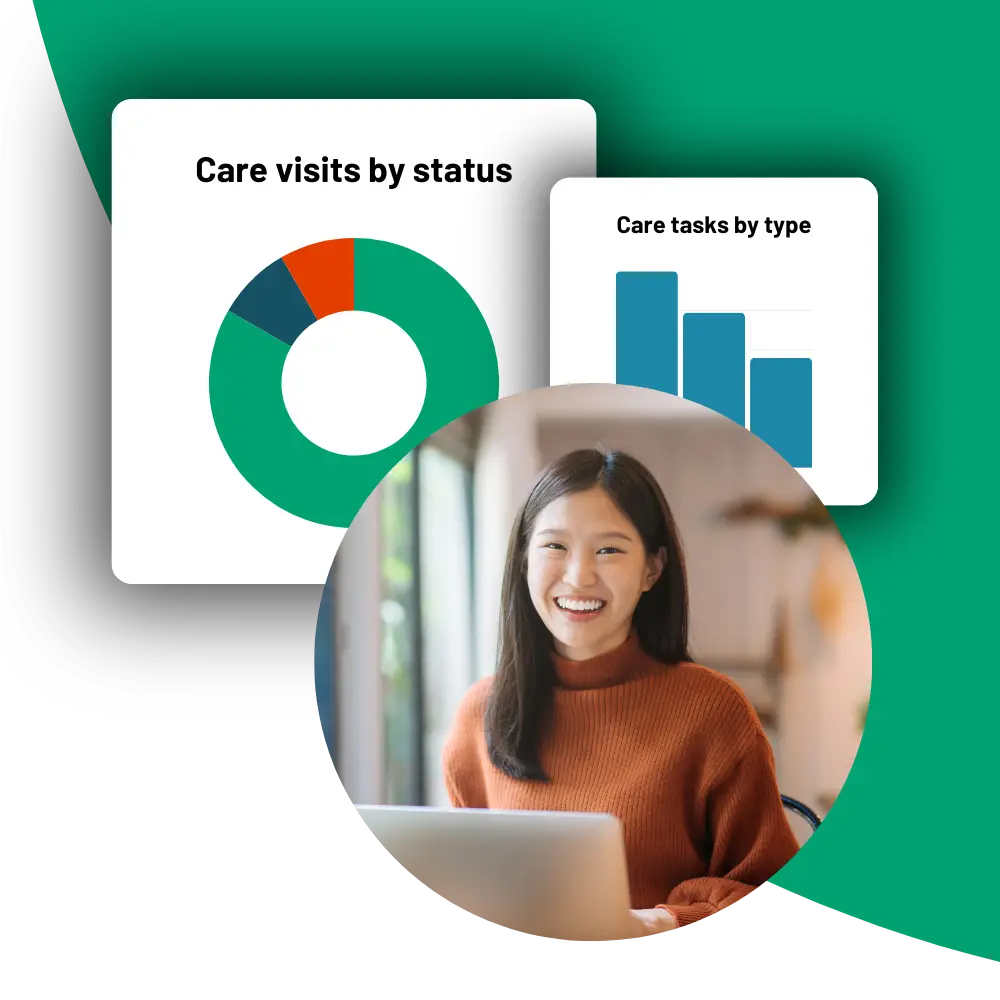
PASS care reporting turns the data your team record every day into clear charts and shareable reports – ready for assessors, inspectors and directors
Here’s how that compares to gathering evidence by hand:
If you’re ready to dive into the details of your care service, track trends, and prepare reports to share with assessors and inspectors, the team at PASS are ready to talk through your needs.
Book a free tour
Evidence a year of great care in minutes
Punctuality, medication compliance, incidents and outcomes – recorded as care happens, and ready to share with any assessor.
Book a 20-minute demo85,000+ care professionals · live in 30 days or less · 24/7 UK support