It’s 9.30am and a client’s son has just called to say that no one visited his mum that morning. Your stomach drops. What should you do?
Your priority is making sure that your client has the support they need.
Arrange for another carer to visit immediately, before you start your investigations. Talk to the original carer, and find out exactly why they didn’t turn up.
Going forward, you need to catch late visits before they turn into missed calls – for your clients’ safety.
Find out why the visit was missed, and make changes accordingly. You also need to make sure that carers know how to contact you, and look into a system that monitors home care visits and alerts you automatically when a team member is late.
In this guide, we’ll explain what you should do if a carer misses a care call, and talk about how you can reduce the risk of missed visits.
Note: In this article, we’re explaining how care providers should respond to missed care visits. If you’re a client or a family member waiting for a late carer, you should contact your care organisation’s main office or out-of-hours number, or call 999 in an emergency.
Quick check: would you catch a late visit today?
Six quick questions about how your service handles late and missed visits right now. You’ll get a readiness rating and the gaps to close first. Your answers stay on this page – nothing is saved or sent anywhere.
0 of 6 answered
1. Would you know within minutes if a carer hadn’t arrived at a visit?
2. Do your carers have one clear way to tell you they’re ill or running late?
3. Could you cover a client’s visit within the hour if their carer was unavailable?
4. After a missed visit, would the family hear it from you before they had to call you?
5. Do you record every late or missed visit, with the reason and the action you took?
6. Could you show an inspector your visit reliability record for the last month?
Table of Contents
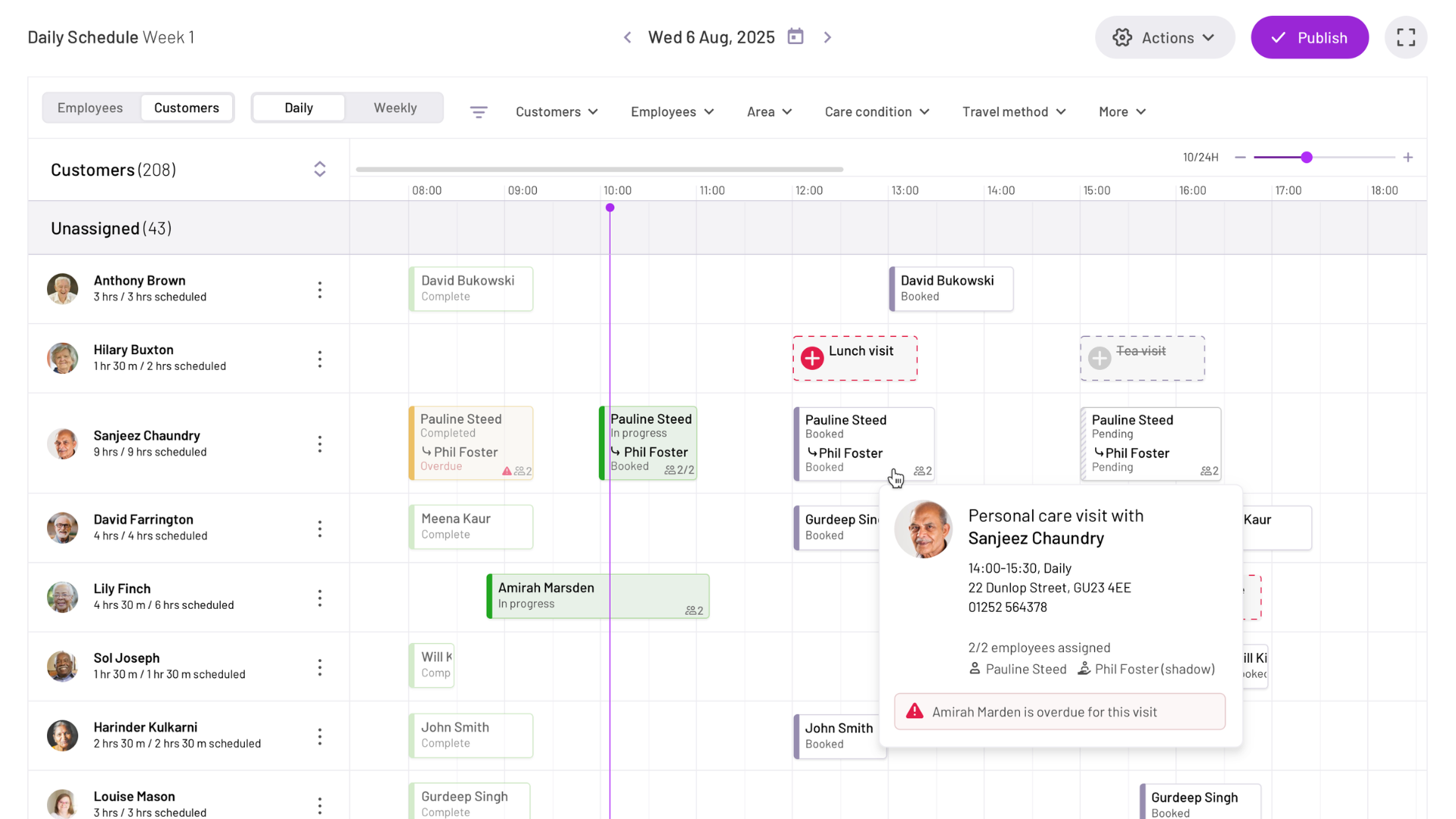
The PASS daily schedule: every carer, visit and gap in one view – late check-ins stand out straight away
A carer missed a visit – what should we do?
When a carer doesn’t turn up, you need to act fast. Check on the client and send someone else over to deliver care as soon as possible. Next, talk to the carer, notify the family, and record the incident. Depending on the situation and circumstances, you may also need to report to regulators or hold an internal investigation.
Step 1: Help the client
As soon as you learn that a client hasn’t had a care visit, you need to make sure that they’re okay, and arrange for someone to go and see them as soon as possible.
If their usual carer is just running a bit late, contact the client, check how they are, and explain that their carer will be with them shortly.
If their carer is unavailable, you’ll need to make sure that another support worker can visit the client and provide the care they need. Let the client know what to expect, and keep them updated while you arrange their care.
Call 999 and seek emergency medical help for your client if:
- They aren’t responding to calls or messages
- They have missed crucial time-sensitive medication
- They seem unusually confused or unwell

Step 2: Talk to the carer
Talk to the carer involved, and find out exactly what happened. Are they ill, unavailable due to a family emergency, or caught up with a previous client?
Depending on the circumstances, you may need to arrange further training for the carer, or even launch disciplinary proceedings.
Step 3: Contact the family
The family may already know that there’s been a missed visit – they may even have contacted you. But, if they aren’t aware, you should let them know.
Your care management software might let you message family members, but this is a time you should pick up the phone.
In the call, you should:
- Introduce yourself and reassure them immediately: “This is Jane Smith, the manager at Mum’s Care Service. Before I start, I want to let you know that your mum is okay.”
- Explain what happened: “Your mum was meant to have a care visit at 9am today. She called us at 9.30 to say that no one had come to see her.”
- Detail the actions you took: “We immediately contacted one of our other carers, Kate, who was in the area, and she was with your mum by 9.45. She made sure that your mum had her medication and breakfast, and helped her to shower.”
- Talk about what will happen next: “Kate will visit your mum at lunchtime as well – she should be there around 1.30. We’re going to investigate what exactly happened this morning and why your mum didn’t receive her usual visit. We’ll also log the incident in our records.”
Family members may be angry or worried. Acknowledge their feelings, and give them time to respond. Make sure they know how to make a complaint if this is the route they’d like to take.
Step 4: Record, report and investigate the incident
It’s important to keep comprehensive records. CQC inspectors and commissioners will want to know your service’s track record of reliability – this shows how safe, responsive and well-led your service is. They’ll also want to know how you respond to any missed visits.
You should record exactly what happened, the actions you took, and the details of any interventions or investigations that occurred as a result of the missed visit.
Depending on the situation and your client’s health and circumstances, you may also need to launch an internal investigation or report the missed visit as a safeguarding incident.
You should also make a note in the carer’s file. If this happens again, you’ll have a record of the first incident and can take appropriate action.
New in PASS
Cover a missed visit in seconds, not hours
Schedule Hero is the AI agent in PASS that builds ranked cover plans the moment a carer can’t make it – balancing travel, availability and continuity. You review, edit and publish.
👉 Meet Schedule Hero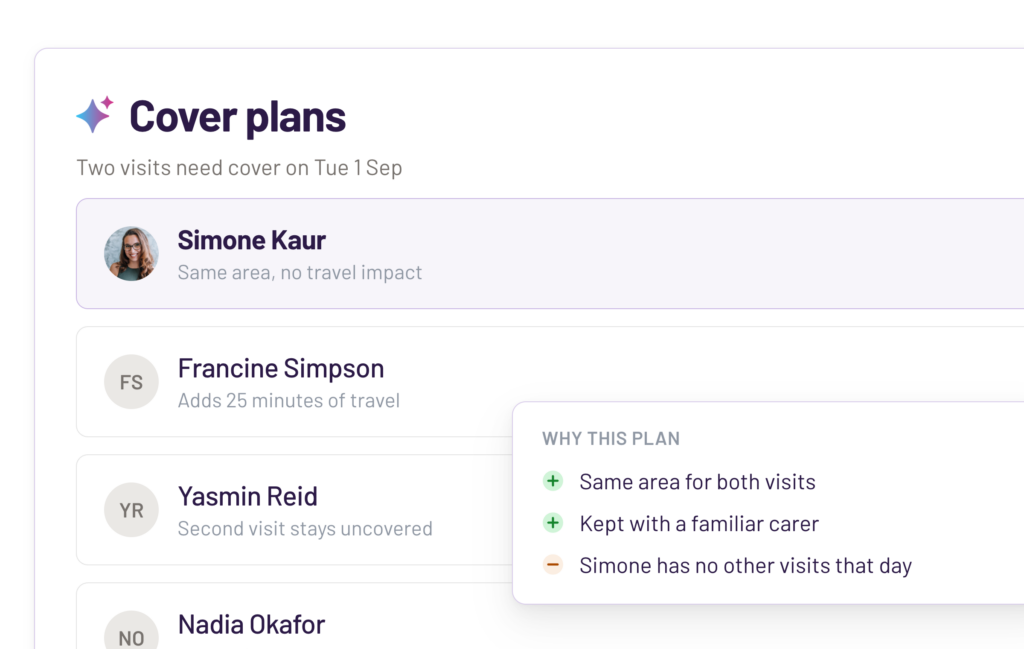
How can we reduce the risk of missed care visits in future?
As a care provider, there are two main ways to reduce the risk of missed visits. Firstly, you should make it easier for your team to arrive on time. Secondly, you need to set up systems so that you’re alerted as soon as a carer is late or unavailable.
Find out why visits are missed. Every time a carer is late or misses a visit, talk to them. Do they have enough travel time? Are care visits long enough? Ask them why it happened – and keep a record of the reason.
It can be hard to catch missed or late visits, too. Often, you’re relying on clients or family members contacting you – or the next carer noticing that a colleague didn’t visit earlier. You need to find out as soon as possible, so you can take action.
How to avoid missed care visits:
- Look at your scheduling and timing
- Make sure your team are familiar with the local area
- Be prepared for bad weather and extreme circumstances
- Make sure your team know how to contact you
- Use electronic call monitoring
Look at your scheduling and timing
If carers are regularly late or missing visits, is it a timing issue? Perhaps they don’t have enough travel time, or earlier care visits are taking longer than expected.
If possible, allocate more time for travelling or care visits. Alternatively, some care planning software can help you schedule more efficient shifts, so your carers spend less time travelling and more time delivering care.
Make sure your team are familiar with the local area
If your team are regularly getting lost or struggling to park, it could be a sign that they don’t know the area well enough.
Make sure that they have access to up-to-date maps and sat nav systems, and encourage them to plan out their routes ahead of time.
Be prepared for bad weather and extreme circumstances
In some circumstances, late or missed visits are almost inevitable. For example, there’s been a heavy snowfall, and a carer can’t travel to a client’s home. Or there’s a norovirus outbreak, and four of your team are off sick. What are you going to do?
You may not be able to prepare for every possible situation, but extreme weather conditions and staff sickness are likely to affect every home care agency. Make sure you have a plan – whether it’s redeploying other staff, using agency workers, or arranging temporary accommodation for your team that’s closer to clients’ homes.
Make sure your team know how to contact you
If a carer is ill, do they know how to alert you? If they’re running late, should they also contact the client or their family with a message in your home care software, or a quick phone call?
Make sure your carers understand why it’s important to call in sick or warn about being late. After all, your clients rely on the support they receive – and missed calls can be dangerous.
As soon as you find out that a carer is unavailable or late, you can take action.
Use electronic call monitoring
Sometimes, a carer can’t or won’t contact you in advance. This is where electronic call monitoring can help you.
PASS electronic call monitoring alerts you as soon as a carer is late – so you can check what’s going on and make arrangements to keep the client safe.
Carers can check in and check out of clients’ homes, using QR codes or NFC technology. As a care manager, you can use PASS electronic call monitoring to see if a carer is late for a care visit, is leaving a visit early, or is still at a previous client’s home.
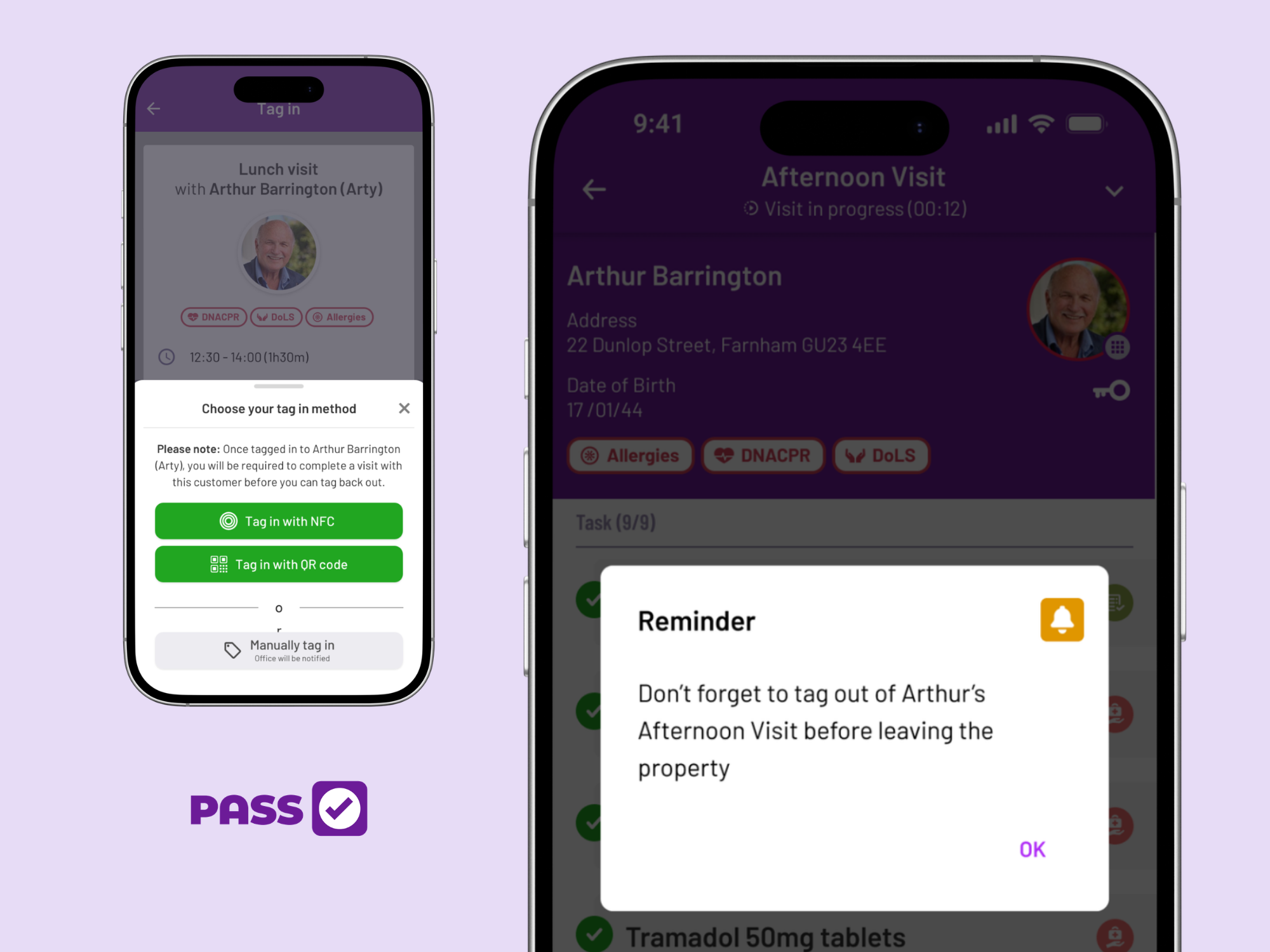
Carers tag in with NFC or a QR code, and get a reminder to tag out before leaving – so every visit is timestamped
It gives you, your clients and their families that extra peace of mind.
It’s also great evidence for commissioners and CQC inspectors. They’ll want to see proof of your service’s reliability. The timestamped visit logs show exactly when your carers visit – and, unlike paper records, they can’t be altered.
Electronic call monitoring helps with billing, too – and evidencing that you’re not short-changing your clients or the local authority. You can prove that you’re delivering the expected hours of care, and your clients are getting the best service possible.
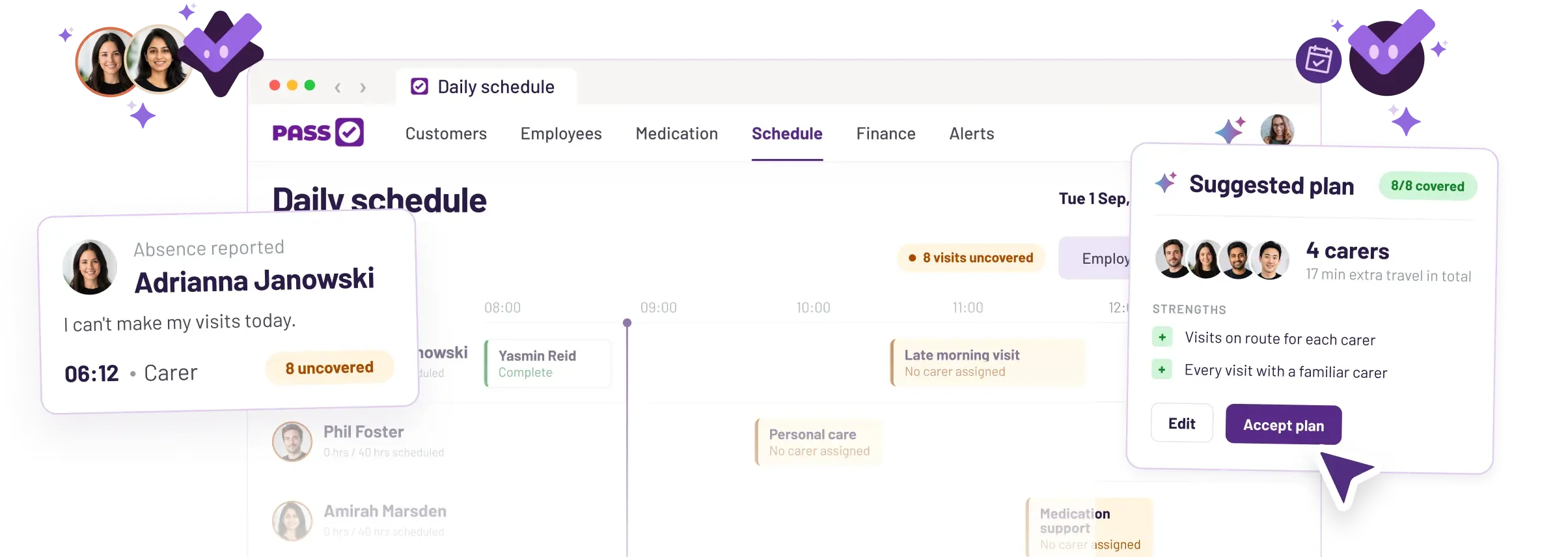
Schedule Hero: ranked cover plans built in seconds, reviewed and published by you
Book a free tour
Catch late visits before they’re missed visits
PASS alerts you the moment a carer is late, and Schedule Hero builds the cover plan in seconds – so no client is left waiting.
👉 Get started with PASS